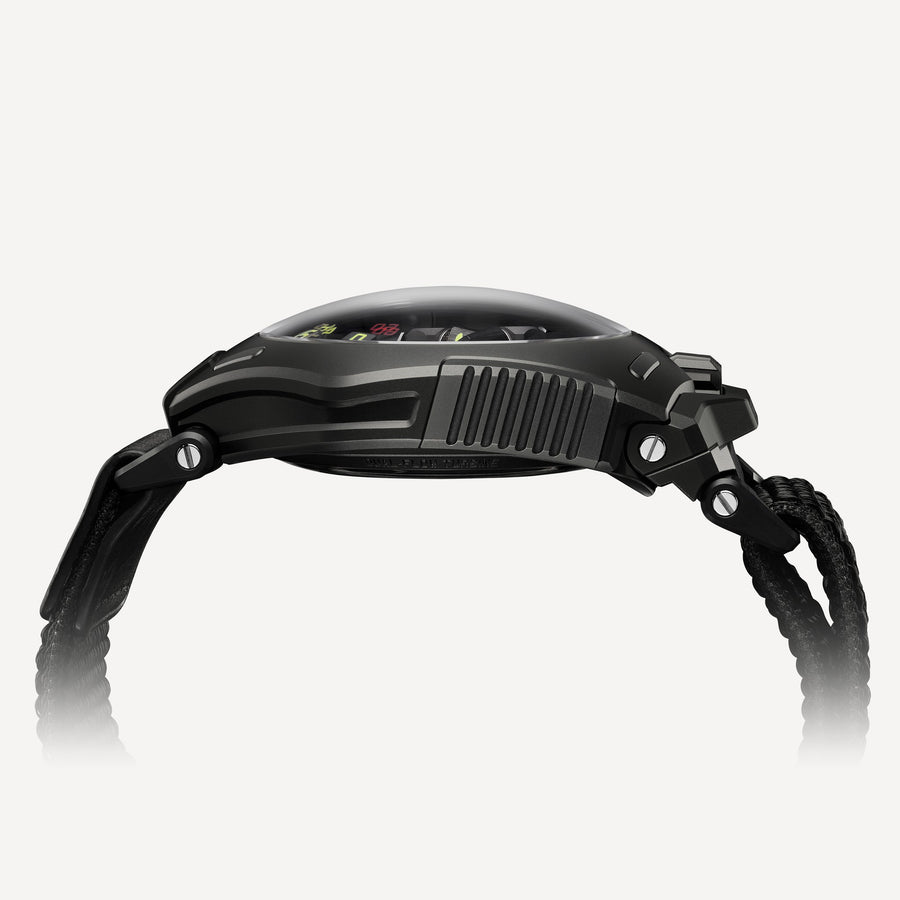
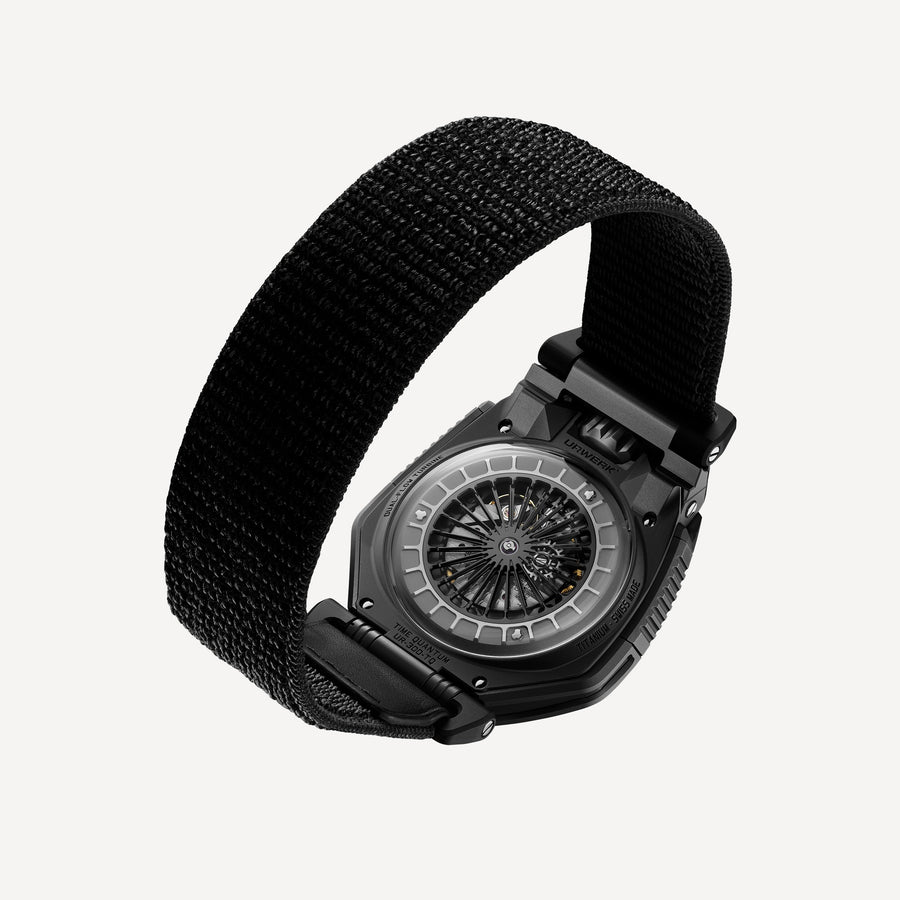
URWERK began at a student party in December 1995, where the watchmaker Felix Baumgartner, his brother Thomas and the designer Martin Frei talked about how best to express time.
How it began
They met over beers and rock music, and by the morning of 1 January 1996 the idea for URWERK was born. Baumgartner was born in Schaffhausen into a watchmaking family. He learned in the atelier of his father, who restores historical clocks, and took his diploma at the watchmaking school in Solothurn in 1995.
Frei, born in Winterthur, studied graphic design in Zurich and took a Bachelor of Arts in Lucerne, where he was a student of the Swiss artist Roman Signer. Baumgartner became the master watchmaker and Frei the chief designer. The brand dates its official birth to 1997, when it first showed its watches at the Academy of Independent Watchmakers (AHCI).
“We were not businessmen. It was extremely risky because we had no idea how our watches would be accepted,” says Felix Baumgartner.
The idea
The name joins two words. Ur is the ancient city in Mesopotamia where, the brand says, the Sumerians first set units of time by the shadows of its monuments. Werk is German for creation or mechanism.
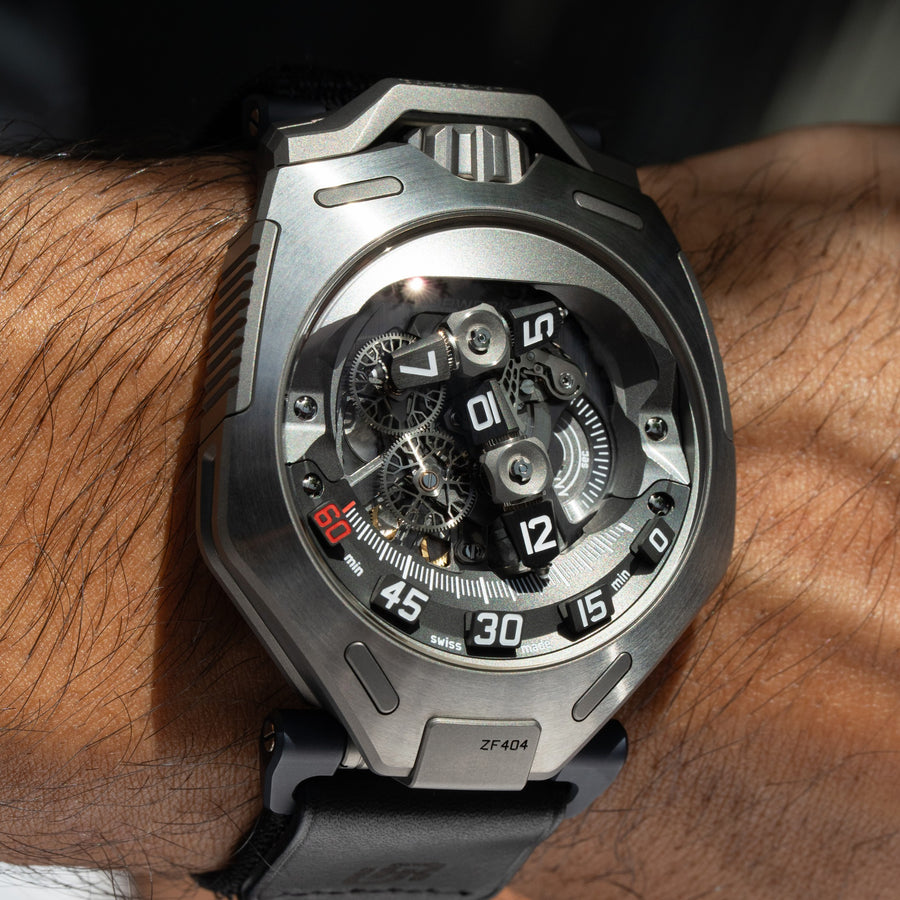
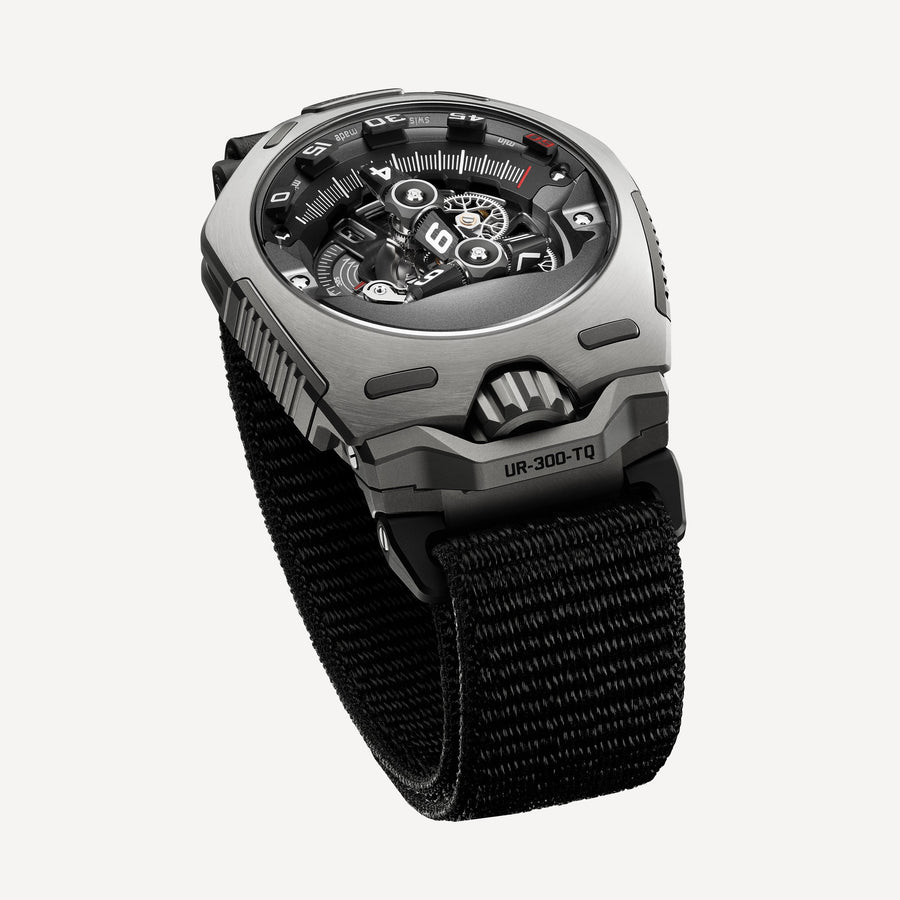
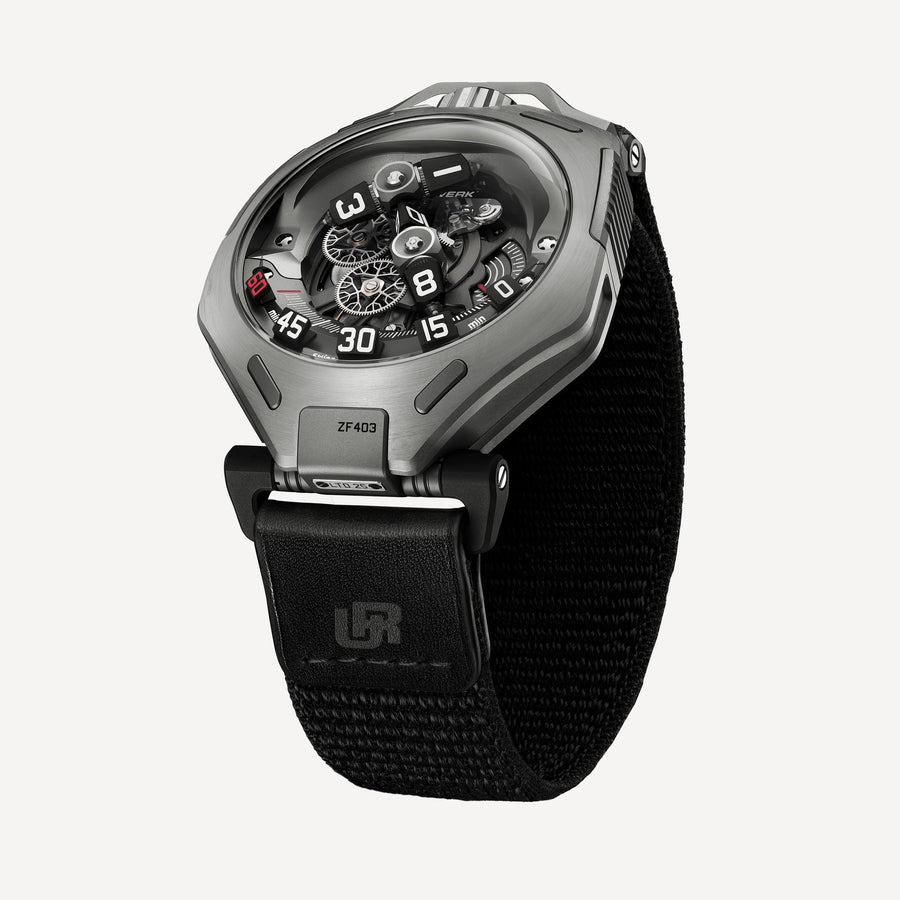
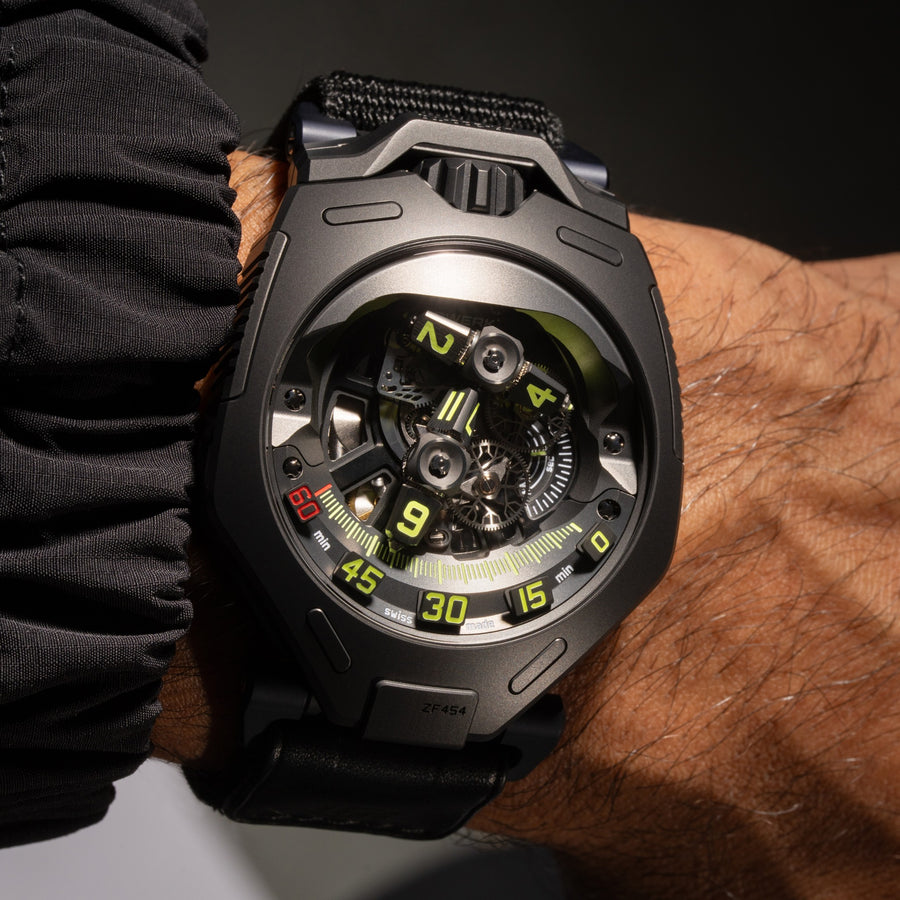
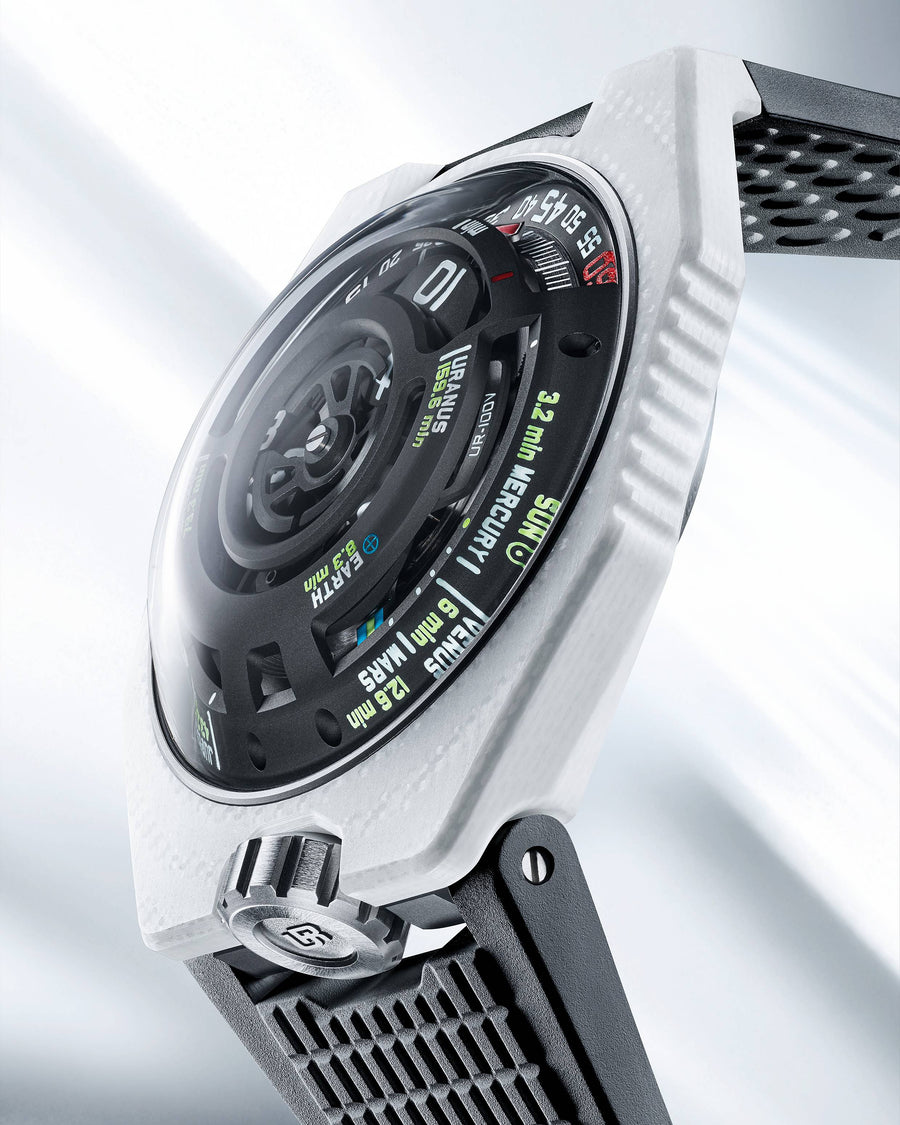
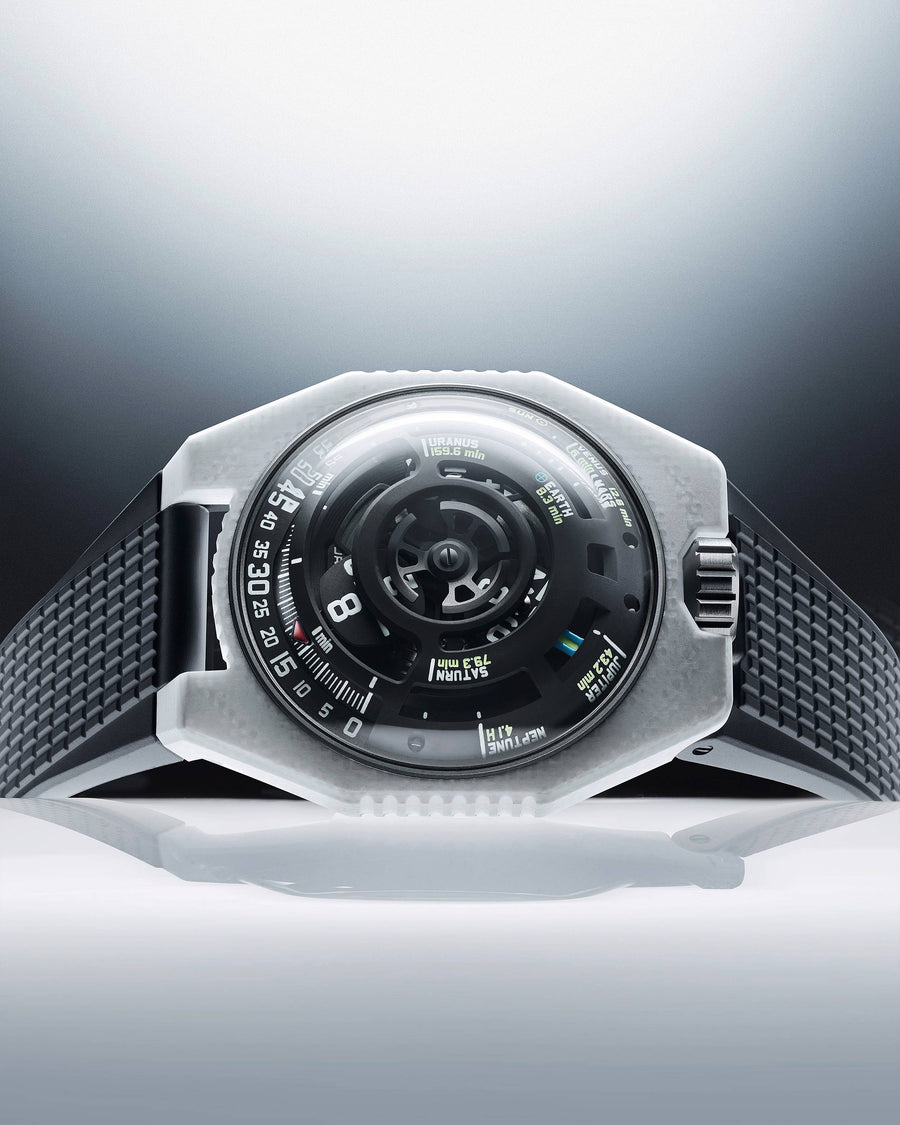
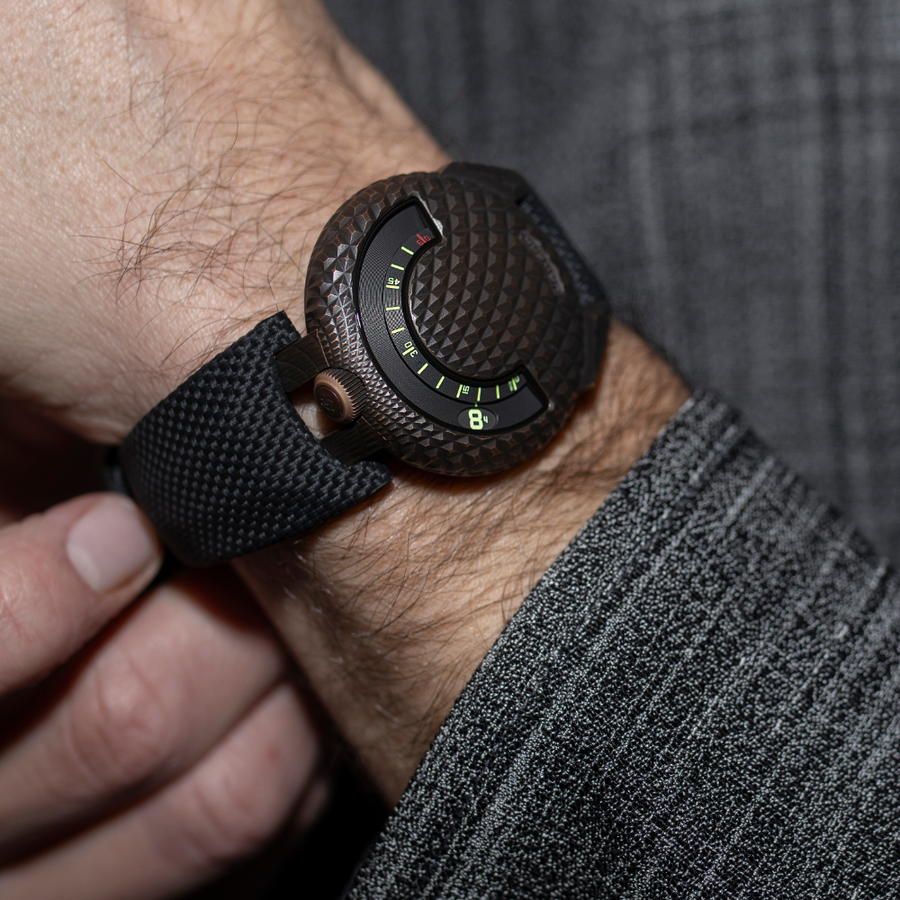
The first models, the UR-101 and UR-102, introduced the wandering hour. The hours ride on satellites carried by a rotating carousel, and each satellite pointer traces its path across a scale of minutes. The brand likens it to a planet moving across the sky. Its founders wanted to make art that tells time, and the satellite display has remained the signature of the house.
The watches
After six years of hardship, the UR-103 arrived in 2003 with forward-facing, cone-shaped satellites. In 2005 URWERK made the Opus 5 in partnership with Harry Winston. The UR-202 then added an automatic winding system regulated by compressed air.

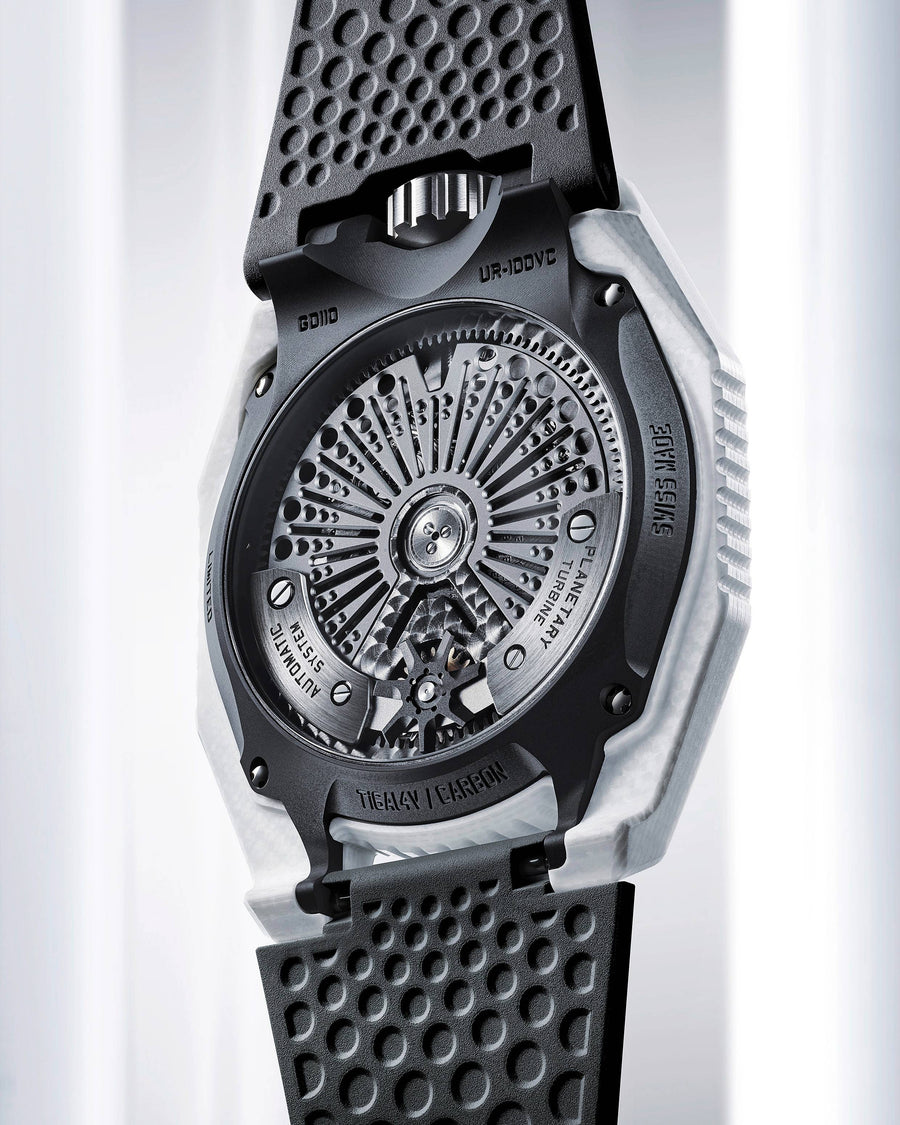
Later watches added more to the satellites. On the UR-100V, the minute pointers pass beneath small dials that show the distance travelled on Earth in 20 minutes, and by Earth around the Sun. On the UR-150 Scorpion, a cam guides the carousel through the hour. At 60 minutes a spring sends the retrograde hand back 240°, while the hour satellites turn 270°.
The UR-1001 Zeit Device goes further still. It measures time from a single second to 1,000 years.
The house today
URWERK makes about 200 watches a year and says it puts quality before quantity. It produces its satellite components in-house and finishes them by hand. The company, URWERK SA, gives its address as Place du Bourg-de-Four 5 in Geneva. Its people live in different parts of Switzerland, and the brand says its projects take giant leaps when they meet in one room.

The UR-10 SpaceMeter shows how far the house will stray from its own rules. It has a round dial, central hands and concentric counters, features that, the brand says, seem alien to its character. Yet it measures how far the Earth travels through space. Time and space, the two ideas the brand puts at its core, are still the subject.
At a glance
- Founded: 1997 (idea born on 1 January 1996)
- Founders: Felix Baumgartner, master watchmaker, and Martin Frei, chief designer
- Based in: Geneva, Switzerland
- Known for: wandering-hour satellite displays
- Production: about 200 watches a year